三維原子陣列的排列方式很難用二維方法來描述,尤其是以十二面體為原子單元的五重對稱原子陣列。- Sep 03 Wed 2025 10:29
-
3-D atomic structure models
- Aug 30 Sat 2025 09:15
-
《第二種不可能》
關於類晶體的發現,流傳著許多有趣而且值得深度反省的傳說,值得有興趣的讀者自己去探索。準晶體的發現過程中有許多有趣且發人深省的故事,值得有興趣的讀者去探究探索。."2022年春節期間,我偶然看到一本書的書名,讀到一篇文章的標題,《第二種不可能》
說實話,我的英文很差,沒耐心看長篇文章,甚至都沒想過要讀完這本書的英文評論。作為一個英語不太好,但仍然具有批判性思維的人,我不明白這是什麼意思。所以我多次的請教了美國的劉教授。我完全誤解了這本書名字背後的深層意義,而這個美麗的誤解讓我開始回顧我所有關於平舖的藝術作品,並開始深入研究彭羅斯平鋪和準晶體。
到目前為止,已經有數百種具有不同成分和不同冶金熱處理工藝的準晶體被生產出來,而彭羅斯鑲嵌則具有無限的鑲嵌結構,,, 一類是二維數學平鋪問題,幾何 位置 (相對的)固定,內部結構不受限制,具有不隨時間改變的特性 。
一個是至少有兩個(或更多)具有不同特徵的不同原子(原子簇。)的三維物理問題,(含有數百種不同的化學組合),熱熔解液化階段到冷卻階段,在達到穩定的過程中,有不同熱處理的時間變化的問題。
這兩個事件僅通過五重對稱性和變化和組合週期性的特徵,進行只有局部的校正,沒有大局的考量。
- Aug 26 Tue 2025 17:12
-
從彭羅斯平鋪的二維幾何到解釋三維準晶體物理問題的邏輯

摘要
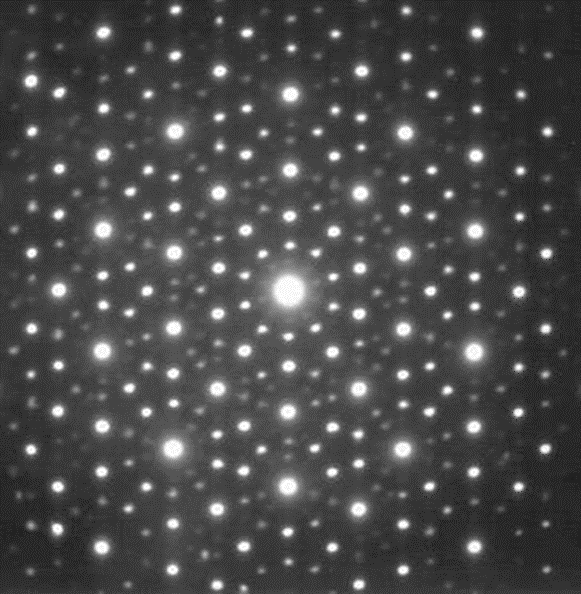
1982年,Dan Shechtman 教授首次觀察到具有十方向對稱的電子透射衍射圖像(如圖1所示),並於1984年正式發表(參考文獻1)。這種展現五重旋轉對稱性的晶體結構,被稱為「準晶體(quasicrystal)」,是一個困擾物理界超過40年的難題,至今仍未被完全理解。事實上,早在1999年(參考文獻2)便有報導指出,研究人員已成功發現尺寸約2毫米的十二面體三維準晶體(參考文獻6)。那麼,我們是否該稱其為「固態晶體」呢?
早在1974年(參考文獻3),彭羅斯(Penrose)先生便提出一種使用兩種不同角度(36°與72°)的菱形瓷磚進行無縫鋪排的方法。這種具備五重旋轉對稱性與鏡像對稱,但缺乏平移對稱性的平鋪方式,後來被命名為「彭羅斯平鋪」。Steinhardt and (參考文獻4,5)是第一位提出準晶體與Penrose平鋪圖具有密切關聯的學者。他指出兩者皆具有非週期性且有序的旋轉對稱結構,而這一特性可以透過高解析度電子顯微鏡(HRTEM)觀察到的十方向對稱衍射圖樣來理解。
因此,過去40年間,許多研究者一直相信三維準晶體的非週期結構與二維的彭羅斯平鋪之間存在深刻的幾何與物理關聯。這種關聯性是否能成為揭開準晶體物理機制的關鍵,值得深入探究。但是在上世紀末期,個人電腦尚未普及,繪圖軟體亦不成熟,使得彭羅斯平鋪的應用與可視化受到侷限。當時多數研究僅能集中於局部原子團簇的五重旋轉特性與原子排列的局部結構分析(模擬的相關原子數少於100個原子),限制了大範圍的原子位點排列在HAADF STEM下觀察到的與彭羅斯圖樣之間的系統性比較(點匹配的相關原子數超過500個原子), 。
雖然彭羅斯瓷磚已被發現超過五十年,但是並不能夠很容易的畫出大圖案。約在三年前,我們從六種不同的十邊形(同構)結構耦合開始,成功建構出可大面積鋪排的彭羅斯平鋪圖。透過比對多張電子顯微鏡下的原子陣列影像與我們設計的大型彭羅斯圖,我們專注於五邊形特殊聚合圖案的幾何對應關係。經過反覆測試與調整,我們最終取得了具有高度一致性的圖像比對結果,並值得在此報導。
- Dec 28 Sat 2024 12:41
-
From Penrose tiling to quasi crystal – Chung Yuan Kung
從彭羅斯平鋪的二維幾何到解釋三維準晶體物理問題的邏輯
Chung Yuan Kung
摘要
1982年,Dan Shechtman 教授首次觀察到具有十方向對稱的電子透射衍射圖像(如圖1所示),並於1984年正式發表(參考文獻2)。這種展現五重旋轉對稱性的晶體結構,被稱為「準晶體(quasicrystal)」,是一個困擾物理界超過40年的難題,至今仍未被完全理解。事實上,早在1999年(參考文獻5)便有報導指出,研究人員已成功發現尺寸約2毫米的十二面體三維準晶體(參考文獻6)。那麼,我們是否該稱其為「固態晶體」呢?
早在1974年(參考文獻11),彭羅斯(Penrose)先生便提出一種使用兩種不同角度(36°與72°)的菱形瓷磚進行無縫鋪排的方法。這種具備五重旋轉對稱性與鏡像對稱,但缺乏平移對稱性的平鋪方式,後來被命名為「彭羅斯平鋪」。Steinhardt(參考文獻12)是第一位提出準晶體與Penrose平鋪圖具有密切關聯的學者。他指出兩者皆具有非週期性且有序的旋轉對稱結構,而這一特性可以透過高解析度電子顯微鏡(HRTEM)觀察到的十方向對稱衍射圖樣來理解。
- Jul 25 Thu 2024 14:27
-
if the quasi becomes pseudo, real will become the truth 準變偽,實則成真chung yuan Kung
if the quasi becomes pseudo, real will become the truth , We have two different atomic sites models for Quasi crystals
如果,準變成偽,實則成幻,影卻成真
Unlimited number of periodic decagonal tiling with a 2(3)-D atom sites quasi-crystal model
Chung Yuan Kung
Department of Electrical Engineering, National Chung Hsing University, 145 Xingda Road., South District[JC1] , Taichung City 40227, Taiwan. Telephone: 886-4-22850359, E-mail Address: cykung@dragon.nchu.edu.tw.
- Jun 09 Sun 2024 18:02
-
Some results of quasicrystal observations 準晶表面觀測的一些結果 cykung貢中元
貢中元準晶表面觀測
從彭羅斯圖案演變為二維準晶體圖案, ,現在不再是晶體的正常重複“晶胞”?
大綱
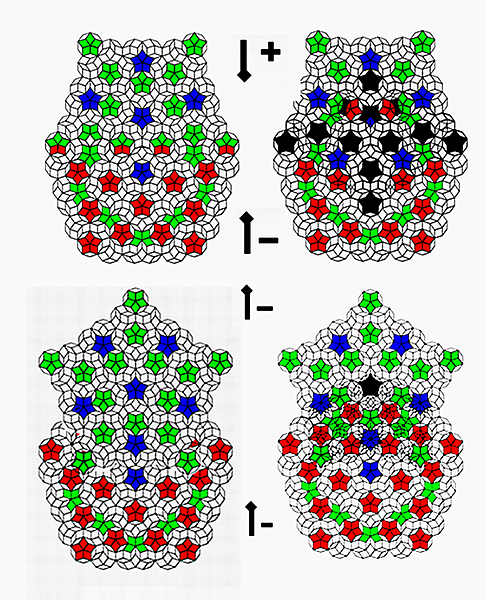
彭羅斯平鋪是三角幾何繪圖的數學問題,準晶體surface 是二維TEM影像的物理問題。這兩個問題之間的(唯一)聯繫是它們都具有五重旋轉對稱性,並且都具有非週期性特徵,但also have無法簡單形容的不確定週期性。這種所謂的聯繫,似乎是一個既容易理解又很難理解的數學問題。這兩個(聯繫)問題如何的連結在一起,卻是一個有等精確解釋的大問題。在本報告中,我們將從準晶表面觀測(STEM)和彭羅斯平鋪中分析和解釋正五邊形陣列的特徵開始,更準確地理解它們之間的關係,和尚未解決的問題。
Penrose tiling is a mathematical problem of trigonometric geometry drawing, and quasicrystal surface is a physical problem of two-dimensional TEM images. The only (two )connection between these two problems is that they both have five-fold rotational symmetry, and both have non-periodic characteristics, but they also have indeterminate periodicity that cannot be simply described. This so-called (two)connection seems a mathematical problem that is easy to understand and yet difficult to understand. How these two issues (are connected is a big question that requires a precise explanation. In this report, we will start by analyzing and interpreting the characteristics of regular pentagonal arrays from quasicrystal surface observations (STEM) and Penrose tiling, to understand their relationships more accurately, and Tried (not completely)to understand unresolved issues how do they form a nuclei.
- May 01 Wed 2024 15:22
-
具有二維原子位準晶體模型的無限數量的周期性十邊形平鋪貢中元chung yuan kung
Unlimited number of periodic decagonal tiling with a2-D atom sites quasi crystal model貢中元chung yuan kung
Chung Yuan Kung
Department. of Electrical Engineering, National Chung Hsing University. 145 Xingda Road., South Dist. Taichung City 40227. Taiwan. Telephone: 886-4-22850359, E-mail Address: cykung@dragon.nchu.edu.tw.
Key words: decagon, coupling, unit cell, atom sites
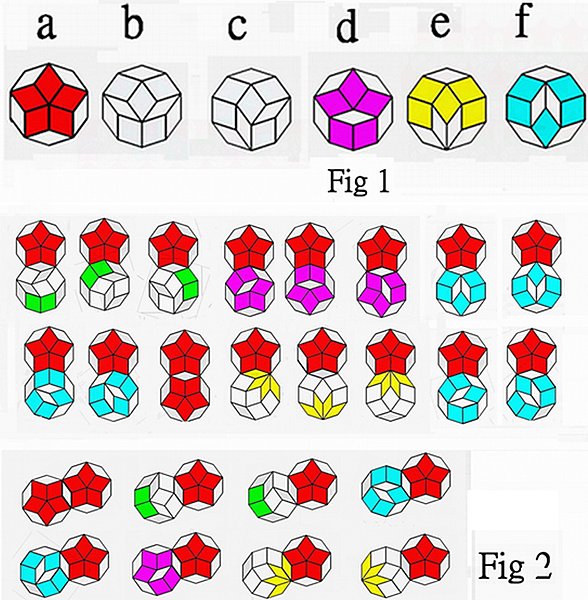
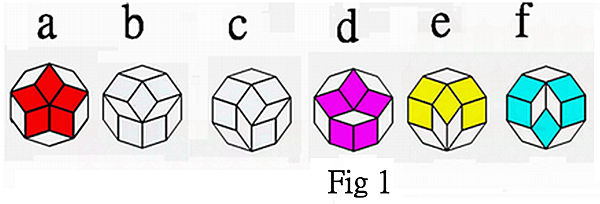
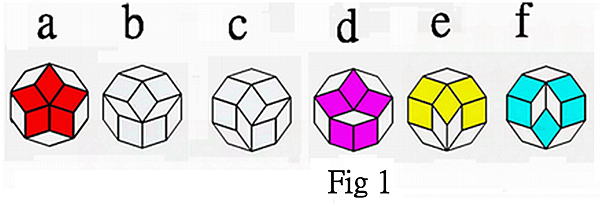
The fat and thin rhombus tiles with acute angles of 36 degrees and 72 degrees can be combined to form six decagonal tiles with different internal structures. Each decagon consists of ten rhombuses: five thin rhombuses and five thick rhombuses; where a, b, c, d, e, and f are marked for six different decagons.(Figure 1) The thick rhombuses in the decagons of type-a, type-d, type-e and type-f are highlighted in red, magenta, yellow, and light blue, respectively. It should be noted that only type-a decagonal tiles are five-fold symmetrical, type-c is neither five-fold symmetrical nor mirror symmetrical, and the rest of the decagons are only mirror symmetrical. These six decagons can be regarded (considered) as basic units; we can utilize any two two of these basic units to produce (infinity) tiles.
- Apr 04 Thu 2024 14:00
-
Unlimited number of periodic decagonal tiling and simplest four way symmetrical tile. (2D-crystal)貢中元chung yuan kung
Unlimited number of periodic decagonal tiling (2D-crystal)
The fat and thin rhombus tiles with different acute angles of 36 and 72 degrees can combine to form six different decagonal tiles, of different inner structures, Each decagons composed of ten rhombuses , five thin rhombus and five fat rhombus , where a, b, c, d, e, f, are marked for six different decagons respectively in Figure 1. For the fat rhombus in the decagons of type-a, type-d, type-e and type-f are highlighted in red, purple red, yellow, and light blue, respectively. These six decagons which can be regarded (considered) as basic unit, instead of two types of rhombuses, to fabricate (infinity) tiles in this paper. And be noted that only type-a decagonal tile is five-fold symmetric and the rest decagons are only mirror symmetric.
With the coupling and tessellation schemes developed, using type-a decagons as base, the other five different decagons can be coupled accompanying with type-a decagons in five different orientations and produced nearly fifty 50 coupling pairs. as demonstrated in fig 2. All these coupling pairs All these coupling pairs could be randomly permutation tessellated to form unlimited periodic Penrose tiling (crystals) as shown in fig 3.
The unit cell is a rhombus surrounded by any four A-type decagons with the same orientation, which can be easily identified and intercepted from figure 3, some results are shown in figure 4a.. The tiles in Figure 4a are tessellated to form new translational crystals, as shown in Figure 4b. This new periodic tiling (crystal) is clearly structurally completely different from the original (parent) crystal in Figure 3.
This very special decagonal crystal has properties that are different from traditional cognitive crystals. This will also be the most fascinating place to study quasi crystal (latter on) in the future.
- Mar 27 Wed 2024 10:29
-
different unit cells in one periodic decagonal crystals, QC design 貢中元chung yuan kung
different unit cells in one periodic decagonal crystals
•If there are different crystal phases inside the crystal, there must be many defects or mismatched atoms on the phase boundcrystal, there must be many defects or mismatche
ed atoms on thearies of the different phases. If there are different phases inside the phase boundaries of the different phases,again
ed atoms on thearies of the different phases. If there are different phases inside the phase boundaries of the different phases,again
•In this case, new crystals are created that embed grains of different phases but sh•ow no grain boundaries.•We deliberately made some of the problematic unit cells, mad
some modifications to the internal structure, and then reassembled them. For this case, the seam connecting the parts needs to be modified somewhat and becomes another kind of different unit cell. Periodic crystals are then made using two or more of these remodified unit cells.
- Feb 17 Sat 2024 18:36
-
All Decagonal penrose tiling , Celebrating the 50th anniversary of the discovery of Penrose tiling,所有十邊形彭羅斯瓷磚平鋪 貢中元chung yuan kung
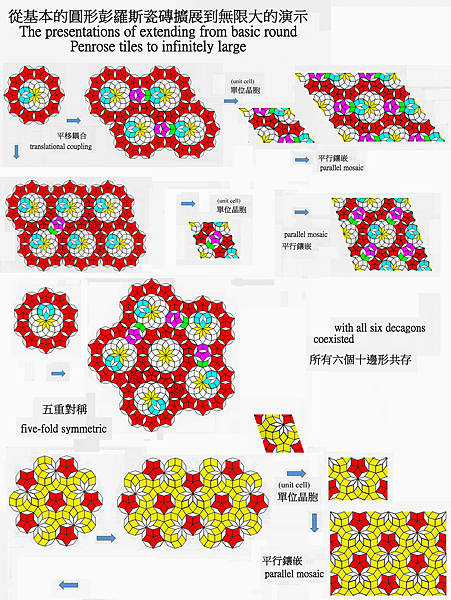
所有十邊形彭羅斯瓷磚
Celebrating the 50th anniversary of the discovery of Penrose tiling
所有十邊形彭羅斯瓷磚平鋪
- Feb 16 Fri 2024 12:09
-
The tile that can be self-coupled to build up a five-fold tiling,periodic and four-way symmetry tiles (crystals) to infinity貢中元chung yuan kung
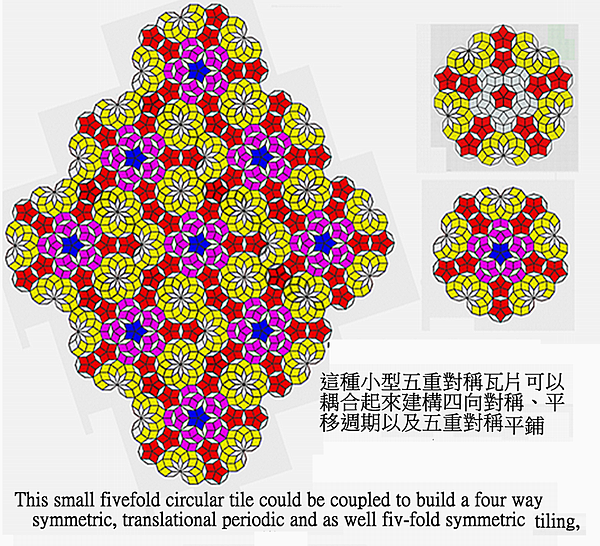
The five-fold symmetrical tile that can be self-coupled to build up a five-fold tiling,periodic and four-way symmetry tiles (crystals) to infinity
四向對稱十邊形平鋪
But this can construct four way symmetric decagonal tile
一些用於構建二維晶體的較小晶胞
Some of the smaller unit cells used to build two-dimensional crystals
- Feb 15 Thu 2024 09:08
-
Some smaller unit cells that form different decagonal two-dimensional crystals
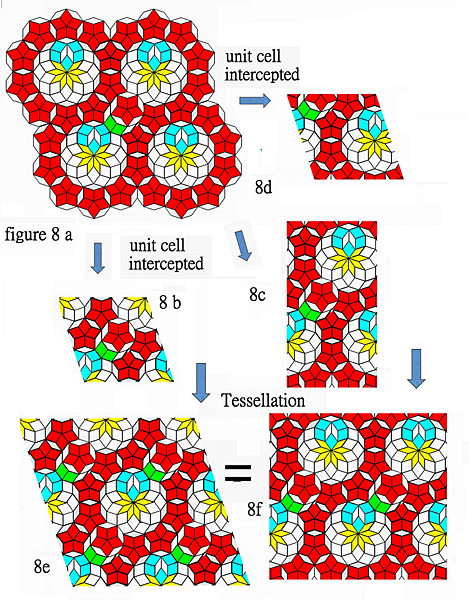
Some smaller unit cells that form different decagonal two-dimensional crystals
Four unit cells that intercepted from a translational decagonal style crystal and form four different crystals.
Intercept some smaller unit cells and Possibly accumulate them to find a 2D quasicrysta
